1st Floor, Tejul Tower, Opp. P. N. Gadgil & Kalyan Jewellers, Rajapeth–Rajkamal Road, Amravati 444601+91 74475 94447 • WhatsApp
LESS PAIN. BETTER FUNCTION. A FULLER LIFE.

Expert Care for TMJ Disorders & Facial Pain

Jaw pain, clicking, restricted mouth opening, headaches and facial pain can arise from different structures. We use a diagnosis-first approach to identify the likely source and plan personalised, conservative care before escalation.

Find the causejoint • muscle • nerve • neck
Conservative firstreversible care where appropriate
Selective imagingCBCT / MRI when indicated
Multidisciplinarycoordinate care when needed
Function firstcomfort • movement • quality of life
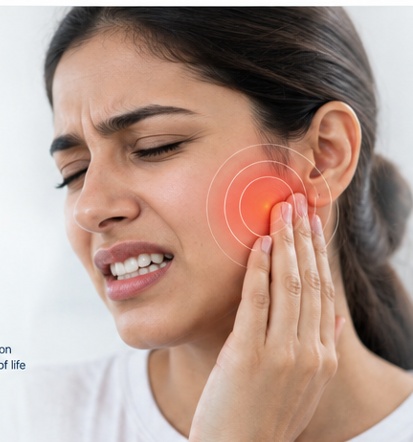
Woman with jaw pain and highlighted TMJ region
Function. Comfort. Confidence.
TMJ DISORDERS

The joint is only one possible source of jaw pain.

Painful clicking, locking or limited movement can arise from intra-articular problems, surrounding muscles or a mixed pain pattern. Assessment begins with history and function before imaging or procedures.

Common Symptoms

Jaw painchewing, talking or rest
Clicking / poppingespecially if painful
Restricted openingintermittent or persistent
Jaw lockingopen or closed episodes
Ear-region discomfortmay overlap with TMJ
Chewing fatiguejoint or muscle contribution
Bite feels alteredrequires clinical correlation
Mixed symptomsjoint + muscle patterns

How We Diagnose

1
History & clinical examinationJoint, muscles, movement, bite and pain pattern.
2
Functional analysisOpening, deviation, sounds and tenderness.
3
Imaging selectivelyCBCT / MRI only when it can change management.
4
Define the pain sourceJoint, muscle, nerve, neck or mixed.

Treatment Options

◌
Self-care & habit guidanceReduce avoidable overload.
◌
Physiotherapy / jaw exercisesFor suitable movement or muscle dysfunction.
◌
Occlusal splintSelected cases; reversible approach.
◌
Joint proceduresReserved for selected intra-articular disease.
FACIAL PAIN & NEURALGIA

Not every toothache is dental.

Shock-like, burning or persistent facial pain may have neuralgic or neuropathic causes. Pain mapping and dental exclusion help prevent unnecessary irreversible treatment.

Common Patterns

Electric-shock painbrief, severe, triggerable
Touch triggersface, chewing, speaking
Burning / tinglingneuropathic pattern
Post-dental painpersists after treatment
One-sided attacksmay follow trigeminal distribution
No clear tooth sourcerequires reassessment
Altered sensationnumbness or dysesthesia
Persistent facial achemay need multidisciplinary care

How We Diagnose

1
Pain mappingQuality, timing, triggers and distribution.
2
Dental exclusionIdentify or rule out odontogenic causes.
3
Neurologic assessmentSensation, cranial findings and red flags.
4
Targeted imaging / referralWhen secondary causes are suspected.

Treatment Options

◌
Diagnosis-specific medicationOften first-line for neuralgic disorders.
◌
Specialist co-managementNeurology / pain / dental as appropriate.
◌
Diagnostic blocksSelected localisation problems.
◌
Ganglion-targeted proceduresOnly selected refractory cases.
HEADACHE & TMJ OVERLAP

Headache can coexist with jaw dysfunction — but it is not always caused by the jaw.

Temple pain, muscle tenderness and jaw-related aggravation may overlap with primary headache disorders. The goal is to identify a reproducible jaw or muscle contribution and recognise when neurological review is more appropriate.

What We Look For

Temple headachewith jaw fatigue or tenderness
Morning discomfortpossible clenching association
Chewing aggravates painsuggests masticatory contribution
Jaw muscle tendernessreproduces familiar pain
Neck overlapcervical contribution possible
Migraine featuresneed appropriate differentiation
Light / sound sensitivitymay suggest primary headache
Recurrent patternhistory matters

How We Differentiate

1
Headache historyLocation, timing, associated symptoms and triggers.
2
Jaw / muscle examinationLook for familiar pain reproduction.
3
Neck assessmentIdentify cervical contribution where relevant.
4
Refer when appropriatePrimary or atypical headache patterns need suitable specialist evaluation.

Management

◌
Jaw-load modificationWhen symptoms are jaw-related.
◌
PhysiotherapyFor demonstrable myofascial or cervical dysfunction.
◌
Splint in selected casesNot a universal headache treatment.
◌
Neurology / physician referralWhen headache phenotype requires it.
JAW MUSCLE PAIN

Sometimes the pain comes from the muscles, not the joint.

Masseter and temporalis overload can produce aching, fatigue, headache and referred facial discomfort. Examination focuses on whether palpation and function reproduce the patient’s familiar pain.

Common Symptoms

Cheek / jaw achemasseter-region pain
Temple paintemporalis tenderness
Jaw fatiguewith prolonged chewing
Morning tightnessmay occur with clenching
Trigger pointspain reproduced by palpation
Reduced comfortable openingmuscle guarding possible
Headache overlapmyofascial contribution
Stress / habit linkmay amplify symptoms

How We Assess

1
Muscle palpationMasseter, temporalis and related muscles.
2
Jaw movementOpening, fatigue and function.
3
Habit reviewClenching, chewing habits and overload.
4
Rule out other sourcesJoint, dental, neuralgic and cervical causes.

Treatment Options

◌
Education / habit controlReduce sustained muscle loading.
◌
PhysiotherapyMobility, stretching and motor control.
◌
Home exercisesIndividualised to examination findings.
◌
Adjunctive careSelected medication or appliance use when indicated.
CERVICAL / NECK PAIN

The jaw and neck can influence one another.

Neck stiffness, postural muscle dysfunction and referred symptoms can coexist with jaw problems. A combined examination helps determine whether cervical treatment should be part of the plan.

Common Symptoms

Neck stiffnessmovement restriction
Shoulder tightnessupper trapezius overload
Jaw–neck interactionsymptoms change with posture
Occipital / temple painmay be referred
Postural aggravationprolonged desk or device use
Muscle tendernesscervical / shoulder region
Limited neck movementrequires evaluation
Mixed jaw painTMJ and neck may coexist

How We Evaluate

1
Cervical historyPosture, trauma and movement triggers.
2
Jaw + neck examinationRange of motion and pain reproduction.
3
Differentiate contributorsTMJ, muscle, cervical, dental or neurologic.
4
Imaging / referral selectivelyWhen clinical findings justify it.

Treatment Approach

◌
PhysiotherapyMobility, strengthening and motor control.
◌
Posture / ergonomicsReduce sustained overload.
◌
Muscle-focused careWhen myofascial contribution is present.
◌
Referral where neededSpinal, neurologic or persistent complex pain.
REFERRED PAIN

The painful area is not always the source.

Ear, tooth, face or throat discomfort can sometimes be referred from jaw muscles, TMJ, cervical structures or other conditions. The examination aims to reproduce the familiar pain and identify the most likely source before treatment.

Where Pain May Be Felt

Ear-region painwithout primary ear disease
Tooth-region painwithout clear dental source
Cheek / temple painmay be muscular
Throat / jaw anglerequires careful assessment
Headachemay overlap with muscle / neck
Neck-to-face referralcervical contribution possible
Mixed locationspain can shift or spread
Persistent unexplained painneeds diagnostic reassessment

How We Trace the Source

1
Map the painLocation, timing, triggers and spread.
2
Examine likely sourcesDental, joint, muscle, nerve and neck.
3
Reproduce familiar painHelps correlate the source.
4
Targeted referralENT, neurology or other specialty when appropriate.

Treatment Principle

◌
Treat the sourceNot merely the location where pain is felt.
◌
Avoid unnecessary proceduresEspecially irreversible dental treatment without evidence.
◌
Coordinate careWhen more than one contributor exists.
◌
Reassess responseReturn to the diagnosis if symptoms do not behave as expected.
Clinical principle: pain in the jaw, face, head or neck can overlap. The diagnosis determines the treatment; imaging, appliances and procedures are selected only when clinically justified.
Don’t ignore persistent jaw or facial pain.▣ Book a Consultation☎ Call Us◉ WhatsAppRelief is possible. Let’s find the cause together.